Recent Viewings

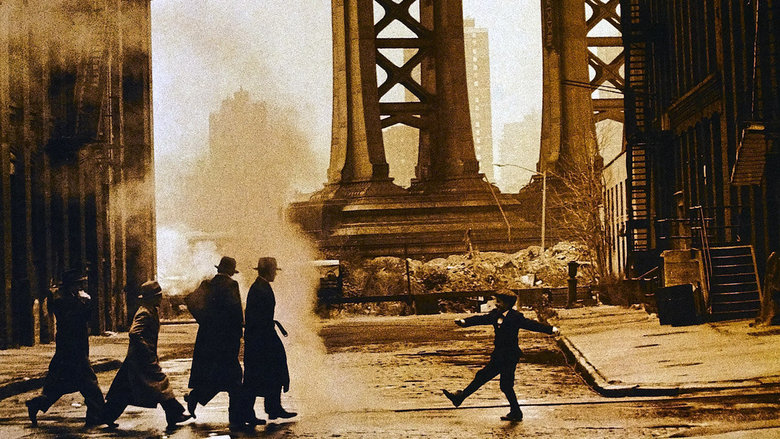
Over the last 2 years here at NOFF most of my writing has been devoted to older films, while giving short shrift to newer films. At the urgent request of my readership (read: my family), today I am introducing a new series, Recent Viewings, which is intended to remedy that situation. The idea is to keep the blog current by offering some brief observations about the latest films I’ve seen. I will continue to write longer reviews, primarily of older films (next up: Once Upon a Time in the West), but that activity will now be supplemented by this ongoing series focusing exclusively on recently viewed films.

_________________________________________________________________

Avatar (James Cameron, 2009)

avatar-avatar-2009-film-9474593-1280-9601.jpg

Does Avatar mark the beginning of a new age in cinema? According to James “I’m king of the world” Cameron, yes. But he’s only partly correct. Technically, the film is a definite leap forward, as it utilizes 3D and CGI better than any film ever has. Too bad, then, that Cameron’s storytelling is as primitive as his technology is advanced. Technically, Avatar indeed represents a new age; story-wise, however, it’s stuck in the Stone Age. Cameron uses his pen like a cudgel, battering us over the head with a heavy-handed ecological message in a trite tale involving a war between the peace-loving, tree-hugging Na’vi of Pandora and an invading army of greedy earthlings. Predictably, the 10-foot, blue-skinned spiritual inhabitants of Pandora are in tune with nature and recognize the interconnectedness of all things, while the rapacious humans literally bulldoze their way through the Na’vi’s pristine habitat in search of a precious energy source. The fact that the Na’Vi blue-skins could be an alien version of the North American Indian, and that one of the humans joins their cause and carries on an obligatory (interspecies) romance with one of them, confirms that Cameron’s unimaginative script merely transplants the plot of Dances with Wolves into his futuristic sci-fi fantasy. No wonder one critic memorably dubbed the film Dances with Smurfs! If this hackneyed plot weren’t lame enough, Cameron also indulges in risible attempts to inject some modern relevance into the cornball proceedings with several oh-so-obvious references to Iraq and Afghanistan, including a hawkish General’s use of the latest military catchphrase, “shock and awe”, which is sure to get some eyeballs rolling.

_________________________________________________________________

Letting Go of God (Julie Sweeney, 2008)

sweeney_julia_006_v31.jpg

I’m a non-believer, but frankly I’ve found most pro-atheist films rather distasteful, notably Bill Maher’s smug Religulous, which exhibits an arrogant, intellectually superior condescension toward believers and betrays an attitude every bit as self-righteous as the most dogmatic Bible-thumper. I suppose that’s why I found Sweeney’s one-woman monologue so refreshing. Instead of adopting a superior tone and resorting to cheap shots at easy targets like Maher does, Sweeney offers something much more interesting and substantive: a poignant, highly personal account of her emotionally conflicted transition from Christianity to atheism. Her conversion to atheism was a gut-wrenching process because, for her, letting go of God also entailed letting go of a very real part of herself and her past – which is why you get the sense that she’s mourning her loss of faith. She still wants to believe, but can’t, because the lack of evidence and her insistence on logical thinking simply won’t allow it. In the end, her heartfelt yet persuasive repudiation of God, which “attacks” theism from within, is sure to hit far closer to home of the theist than a barrage of smug-bombs tossed by an entire army of militant atheists.

_________________________________________________________________

Invictus (Clint Eastwood, 2009)

invictus-20091.jpg

Eastwood has been on a downward spiral ever since his canonization following Unforgiven, and I’m afraid the spiral has reached its nadir. Last year he made two of the year’s worst films, and he’s at it again this year with Invictus, a heavily dramatized account of Nelson Mandela’s efforts to unite South Africa through rugby. The country’s rugby team, once a symbol of apartheid, has been struggling but Mandela, in his infinite wisdom, realizes how important the team’s success at the upcoming World Cup will be to the country. And so through Mandela’s encouragement the team’s captain, Matt Damon(!), leads the team to a triumphant victory in the climactic “big game” over a seemingly invincible club, bringing the entire country together in the process. In detailing the team’s stirring quest for victory Eastwood gets himself firmly stuck in inspirational goo, reducing Mandela’s story to facile melodramatics and simplistic “can’t we all just get along” sentimentality, and confirming once and for all that the canonization of Eastwood the director is one the biggest jokes in the critical community.

_________________________________________________________________

It’s Complicated (Nancy Meyers, 2009)

its_complicated_merylstreep_alecbaldwin1-500x2611.jpg

Were it not for Meryl Streep and Alec Baldwin, as a divorced couple carrying on an affair together, this uneven romantic comedy, which indulges in overly broad comedy one moment, then shamelessly tugs at your heartstrings the next, would be quite awful. But the onscreen rapport between these two consummate professionals is good enough to transform the subpar sitcomish material into something marginally palatable.

Top Ten Films of the 2000s

Like many film fanatics I love making Top Ten film lists, and what better excuse to do so than the end of a decade? Here are my Top Ten films of the 2000s:


1. Mulholland Dr. (David Lynch, 2001)

mulhollanddr-photo_181.jpg

Like An Occurrence at Owl Creek Bridge, Lynch’s mesmerizing film occurs entirely in the mind of his dying protagonist, “Betty”, a would-be Hollywood starlet who (re)casts herself in fantasy as the heroine of a mystery story, the solution to which only leads her back to grim reality. In telling Betty/Diane’s sad story Lynch and Naomi Watts - whose shocking transformation from a naïve, endearingly optimistic aspiring actress named Betty to a disillusioned failed actress and jilted lover named Diane is utterly astonishing - expose the filthy underbelly of Tinseltown, whose glittery surface conceals a darker reality of shattered dreams, broken hearts and lost identities.

Angelo Badalamenti’s eerie score sets just the right mood for Lynch’s mysterious and haunting imagery. Listen to it here.

____________________________________________________

2. No Country for Old Men (Joel & Ethan Coen, 2007)

nocountryforoldmen21.jpg
 

After a couple of disappointing films, the Coen brothers made a stunning return to form with this powerfully directed crime thriller, which boasts the most memorable villain of recent memory in the form of Javier Bardem’s coin-flipping, bolt gun-brandishing Anton “Friend-o” Chigurh, the personification of pure evil whose hideous bowl-cut alone is enough to give you the heebie-jeebies. Aside from Bardem’s unforgettable portrayal, perhaps the most notable aspect of No Country for Old Men is its lack of a film score. I am a certified film score connoisseur, but the Coen brothers prove that music is not a requirement for great cinema (much to the chagrin of Carter Burwell, I’m sure). Indeed, the brothers’ inspired use of sound (and silence) makes the need for a composer completely superfluous. Consider the unbearably suspenseful sequence in which Chigurh pays an unexpected visit to Llewelyn’s hotel room. Seriously unnerved, Llewelyn sits oh-so-quietly on his bed, nervously clutching his gun as Chigurh stealthily walks up to his door, stops for a few seconds just behind it, and then slowly walks away. Llewelyn sees the hallway lights go off underneath his door and waits in complete silence for an agonizingly tense few moments until…WHAM!…Chigurh breaks the silence by blowing the lock off the door with his bolt gun. Most directors would try to ratchet up the tension with suspenseful music. Not the Coens, who demonstrate that light footsteps and the soundless anticipation of imminent violence can be far more nerve-racking than an orchestra’s worth of heart pounding music.

_____________________________________________________

3. The Assassination of Jesse James by the Coward Robert Ford (Andrew Dominik, 2007)

326962881.jpg

Dominik asserts himself as one of the most promising directors working today with The Assassination of Jesse James by the Coward Robert Ford, a poetic, elegiac Western which both celebrates and debunks the legend of Jesse James through the eyes of Casey Affleck’s Bob Ford, whose childhood idolization of James turns to fear and resentment in adulthood when the reality of the man fails to live up to the myth living in his head. If you’re like me and you consider American film of the ‘70s to be the last golden age in cinema, then chances are you’ll greatly appreciate The Assassination of Jesse James by the Coward Robert Ford, an unusually ambitious genre film which would have seemed perfectly at home between, say, McCabe and Mrs. Miller and The Godfather.

Listen to Nick Cave and Warren Ellis’ memorable score here.

_____________________________________________________

4. Spirited Away (Hayao Miyazaki, 2001)

spirited031.jpg

Brimming with imagination, populated by amazing creatures and as richly animated as anything by Disney, Miyazaki’s enchanting animated tale, one of the few sheer delights of recent cinema, ties an Alice in Wonderland type fantasy to an exciting adventure story, while touchingly celebrating courage, friendship and personal identity.

Listen to the great Joe Hisaishi’s memorable score here.

_____________________________________________________

5. Before Sunset (Richard Linklater, 2004)

before_sunset_09_1400x9271.jpg

As the steadicam follows Celine and Jesse, the reunited lovers from Before Sunrise, around Paris and finally up to Celine’s apartment, Linklater and his actors, who once again deliver uncannily naturalistic performances, achieve a rare sense of intimacy, as if we really were following this couple around, eavesdropping on their private conversations. Even more remarkable, the evident rapport between Hawke and Delpy is so authentic, so genuine and true, that the essence of romantic love seems to have been captured on the celluloid itself. If you’re tired of watching mindless Hollywood romances, check out Before Sunset, a genuine thinking person’s romance (but make sure to watch 1995’s Before Sunrise first!).

_____________________________________________________

6. The Wrestler (Darren Aronofsky, 2008)

rourke_thewrestler1.jpg

Combining grainy documentary-like authenticity with dark romantic poetry, The Wrestler might best be described as a vérité fairy-tale, working both as a naturalistic glimpse inside the brutal world of professional wrestling and as an elegiac requiem for washed-up wrestler Randy “the Ram” Robinson (Mickey Rourke). Rourke takes the viewer on an emotional journey with his “broken down hunk of meat”, never stepping wrong in a complex, multi-faceted performance of body-slamming, heart-rending, tear-shedding and blood-letting power. Having failed in his attempt to create a new life for himself after wrestling, Randy finds himself compelled to return to the only place he knows: the ring. With an aura of tragic fatalism hovering over him, Randy enters the ring for the last time, determined to recapture his past glory, if only for one fleeting moment before departing the arena forever. Poignantly, he succeeds, climbing the ropes to salute the crowd and deliver his signature “Ram Jam” for the final time, and then leaping through the air, onto the canvas, and into cinematic folklore.

______________________________________________________

7. Requiem for a Dream (Darren Aronofsky, 2000)

requiem_for_a_dream_screenshot_11.jpg

Employing myriad visual/aural techniques to convey the manic, fragmented, disoriented state of mind of the addict, Aronofsky captures the subjective experience of drug addiction with harrowing, visceral intensity in Requiem for a Dream, an experimental near-masterpiece which concludes with an extraordinary montage sequence that cuts back and forth between the four main characters as their sad, tragic fates unfold, building to an astonishing crescendo, aided by Clint Mansell’s already-classic music, that would have impressed the Griffith of Intolerance.

Listen to Mansell’s amazing score here.

______________________________________________________

8. Let the Right One In (Tomas Alfredson, 2008)

let_the_right_one_in11.jpg

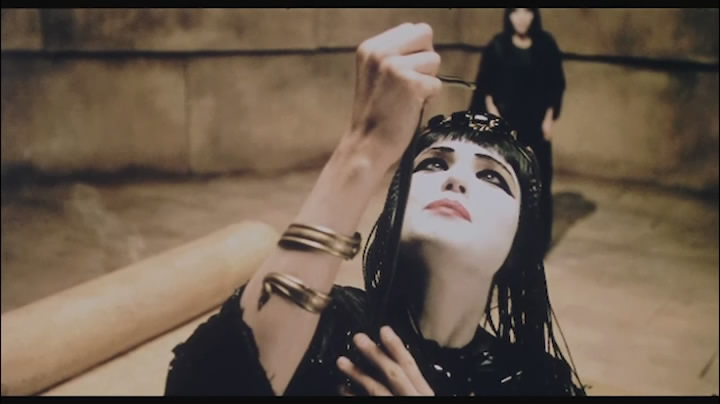
Eschewing the gratuitous gore and CGI effects of the typical modern Hollywood horror movie, Let the Right One In favors a slow burn atmosphere of mounting dread with an emphasis on story and characterization, while still managing to pull off several memorably horrific sequences, notably the soon-to-be famous “pool scene” featuring remarkably imaginative decapitations and dismemberments. The result is a stunningly original horror movie which combines an ingenious re-imagining of the vampire flick with a surprisingly sweet romance/poignant coming-of-age tale - or, given that one character happens to be immortal, a poignant coming-of-agelessness tale.

______________________________________________________

9. Caché (Michael Haneke, 2005)

cache1.jpg

In Haneke’s creepy thriller, the stable relationship of a happily married couple is upset when they start receiving mysterious videotapes of their home under surveillance. But who’s sending them? Haneke never definitively answers. Caché works best, I think, as a self-reflexive acknowledgment of the director’s godlike role in manipulating his characters and the audience. For it is Haneke, is it not, who’s really sending those surveillance tapes? Certainly the fact that Haneke stages many scenes with the same kind of static, voyeuristic camera set-ups we see on the surveillance tapes lends credence to this reading. That, above all, implicates Haneke in the “crime”. After all, it links the director’s shooting style to that of whoever is shooting the tapes. As such he can be seen as the omnipotent presence hovering above and beyond the proceedings, manipulating the characters in the filmic universe of his own creation. But there is enough going on in this provocative, formally inventive film to support multiple interpretations, which is why it is probably destined, like Blow-Up before it, to be analyzed ad nauseam by stuffy film school professors everywhere (not that that’s a good thing).

______________________________________________________

10. The King of Kong: A Fistful of Quarters (Seth Gordon, 2007)

billymitchell1.jpg

My favorite documentary of the 2000s was not about the Iraq War but about the Donkey Kong War, the monumental struggle between good and evil waged by video arcade geeks Steve Wiebe, the nice guy underdog, and Billy Mitchell, the villainous nerd and undisputed Donkey Kong champ whose rock star status among video gaming geeks even landed him a silicon-filled trophy wife. The King of Kong: A Fistful of Quarters may not have been “the best” documentary of the decade, which was a particularly rich period for the form, but it was certainly the most entertaining one.

______________________________________________________

Here are a few additional recommendations:

Memento
You Can Count on Me
Amores Perros
In the Mood for Love
Crouching Tiger, Hidden Dragon
Ghost World
Devils on the Doorstep
The Piano Teacher
Y Tu Mama Tambien
Bully
Hedwig and the Angry Inch
The Magdalene Sisters
The Son
Bus 174
Capturing the Friedmans
Touching the Void
Kill Bill Vol. 1
A Tale of Two Sisters
Sideways
Open Water
Shaun of the Dead
Maria Full of Grace
Kill Bill Vol. 2
Red Lights
Grizzly Man
A History of Violence 
The Death of Mr. Lazarescu
The Lives of Others
Exiled
United 93
Ratatouille
4 Months, 3 Weeks and 2 Days
There Will Be Blood
Once
Zodiac
Cloverfield
WALL•E
Bigger Stronger Faster*
Inglourious Basterds
Up
A Serious Man
In the Loop
Coraline

Film Music: Cloverfield

normal_cloverfield-1-10241.jpg 

Anyone who grew up watching Toho studio monster movies on television will be familiar with the music, if not the name, of Akira Ifukube, the great film composer who wrote the classic scores to Godzilla (1954) and Ghidrah, the Three-Headed Monster, among many others. Ifukube died in 2006 but his musical spirit gloriously lives on in Michael Giacchino’s 2008 “Roar”, the rousing overture which plays over the end credits of Cloverfield. There are those who dismiss the composition as an outright rip-off of Ifukube’s style, but charges of plagiarism are utter nonsense, merely the glib observations of people lazily listening at the surface of the piece and unduly focused on Ifukube’s influence. “Roar” intentionally evokes Ifukube’s style, particularly in its use of a driving ostinato, but Giacchino’s inspired orchestration beautifully weaves together a set of relatively simple themes to create something entirely his own, using soaring sopranos, blazing woodwinds, wailing brass and big percussion hits to genuinely stirring effect.

Listen to it here.

Beyond the Canon

Iain Stott is at it again over at his blog The One-Line Review. Several months ago he invited a select group of cineastes to participate in a poll the purpose of which was to find, consensusly, ”The 50 Greatest Films.” Unhappy with the fairly predictable results (Citizen Kane was #1, Vertigo #2, 2001 #3 etc.), Mr. Stott decided to conduct a follow-up poll, only this time 289 established classics - the “canon” - were eliminated from consideration. The eclectic results are decidedly more refreshing than the earlier poll, if still somewhat predictable and occassionally bewildering (Eyes Wide Shut #1?).

155 people participated in the poll. See my list here.

Top 50 Countdown - #1

-1-

Once Upon a Time in the West

1961561020a1.jpg

Year: 1968

Director: Sergio Leone

And so my Top 50 Countdown finally comes to an end. Except it doesn’t. After all, I want to do justice to my favorite film. I have much to say about Leone’s great Once Upon a Time in the West and so look for my review coming soon. In the meantime you can read a little something I posted a while ago here.  

Top 50 Countdown - #’s 10-2

-10-

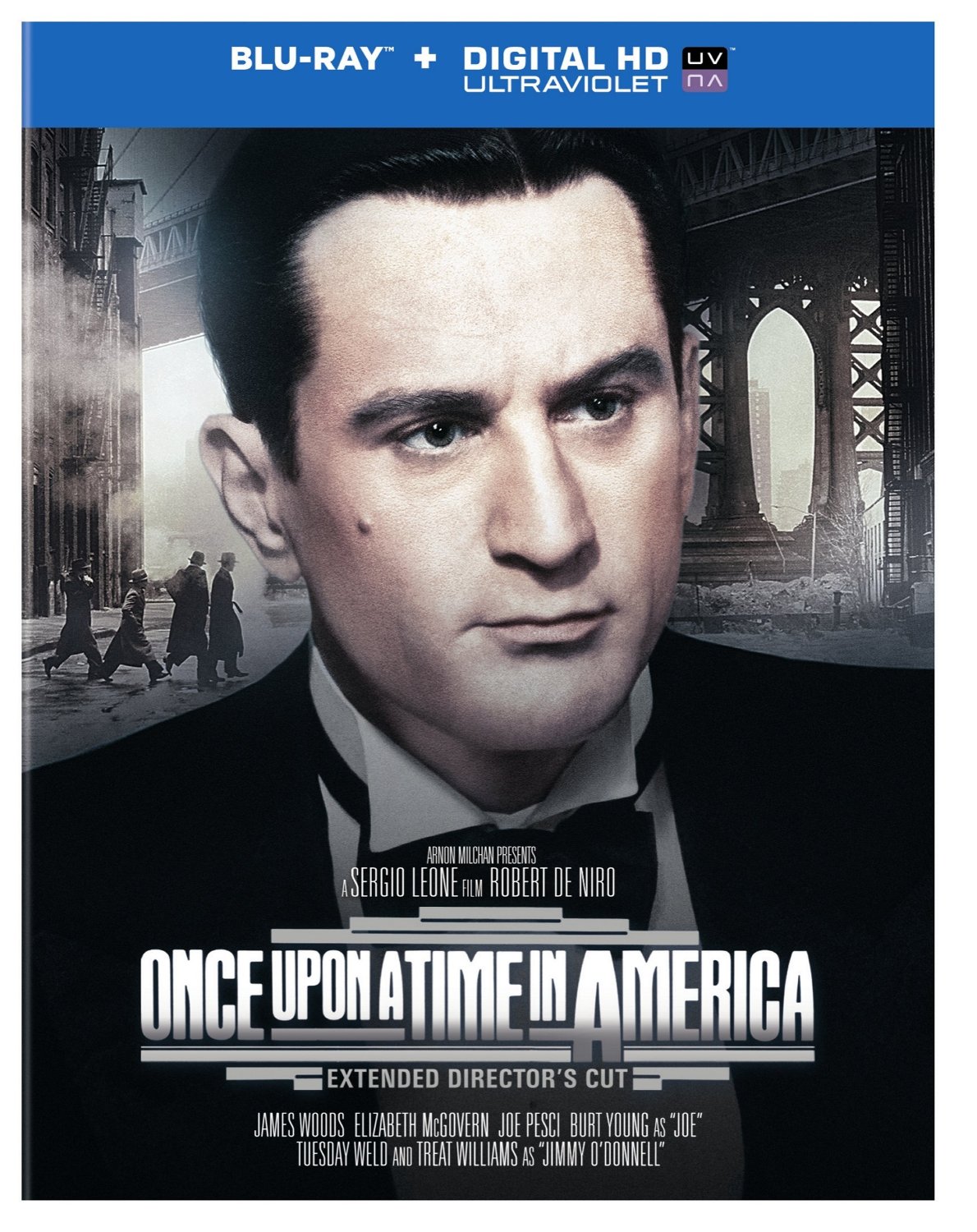
Once Upon a Time in America

once_upon_a_time_in_america_ver111.jpg

Year: 1984

Director: Sergio Leone


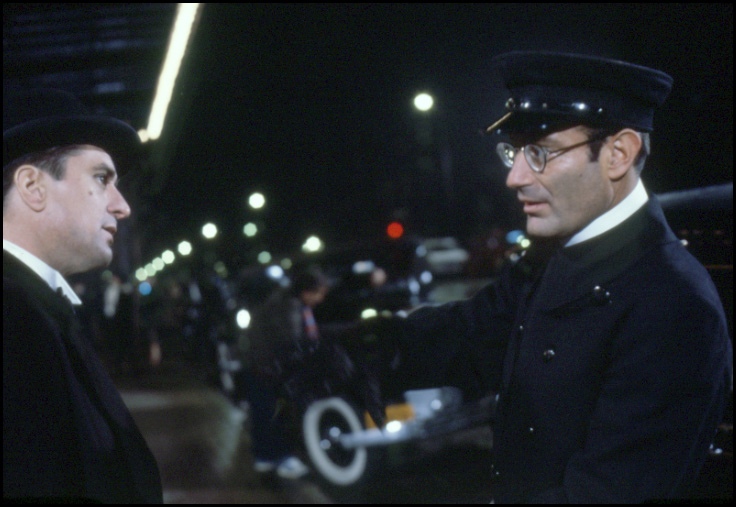
With shootouts, murders and Prohibition speakeasy parties aplenty, Once Upon a Time in America is, no question, a virtuoso genre piece, but Leone also manages to transcend the gangster genre, transforming it into an exploration of the unreliability of memory, the subjectivity of truth, and the ephemeral nature of time by filtering everything we see through the hazy prism of his elderly ex-gangster protagonist, Noodles (Robert De Niro), a man haunted by his perceived betrayal of his best friends 35 years earlier. Through a series of flashbacks, always triggered by Proustian links between the past and the present, Noodles, worn and withered by time, looks back on his botched life and eventually realizes that he was not the betrayer but the betrayed.

As Noodles, De Niro gives one of his finest performances. He’s especially good as the elderly incarnation of Noodles, movingly expressing his characters’ deepest emotions, particularly his sense of regret, through the poignant inflections of his line readings and his equally poignant facial expressions and bodily movements - a particularly nice touch is the way he walks slightly hunched over, as if he were carrying the weight of 35 years of crushing guilt. Aided immeasurably by Ennio Morricone’s genuinely haunting score, Once Upon a Time in America achieves an emotional profundity of Proustian proportions, and often seizes this viewer with a paralyzing sense of melancholy.

Read about my favorite scene from the film here

______________________________________________________________


-9-

Psycho

psycho-1960-alfred-hitchcock-janet-leigh-pic-21.jpg

Year: 1960

Director: Alfred Hitchcock


Hitchcock might have been playing the audience like a piano with Psycho, but he gets great support from Bernard Herrmann’s famous screeching violins and from Anthony Perkins, who stutters and stabs his way to a legendary performance.

Listen to Herrmann’s menacing strings-only score here while reading my longer review of the film here.

______________________________________________________________


-8-

Taxi Driver

taxi_driver_poster1.jpg

Year: 1976

Director: Martin Scorsese


The definitive study of loneliness, alienation and insanity, Taxi Driver achieves a rare authenticity through 1) disturbing voice over narration that sounds as if it were lifted directly out of an actual diary of a crazed loner, 2) grainy location shooting that looks as if the grime of the streets was captured on the very film stock and, above all, 3) De Niro’s frightening portrayal, which digs so deeply to the core of his unbalanced character that he doesn’t seem to be acting the part of Travis Bickle so much as manifesting a deeply disturbed side of himself.

______________________________________________________________


-7-

The Godfather Part 2

the_godfather_21.jpg

Year: 1974

Director: Francis Ford Coppola


As the film flashes back and forth between Vito’s rise to power at the beginning of the century and Michael’s moral/spiritual downfall in the ‘50s, Coppola crafts a thematically sophisticated, visually stunning and emotionally powerful epic chronicling, among other things, the ruination of the traditions and values of family, a theme which enables Coppola to transcend the particulars of the gangster genre and give his film universal significance.

Read my longer review here.

______________________________________________________________


-6-

2001: A Space Odyssey

2001_a_space_odyssey-7655241.gif

Year: 1968

Director: Stanley Kubrick


Eschewing conventional storytelling techniques, Kubrick’s quasi-mystical tale of humankind’s evolution from primitive ape-man to angelic Star-Child (the final evolutionary leap of which hinges on man’s ability to harness the potentially destructive nature of his technology, here embodied by Hal, the all-too-human computer run amok) employs an elliptical, ambiguous narrative structure which greatly deepens the enigmatic, mysterious power of this visually and aurally stunning sci-fi masterpiece. Remarkably, the farther Kubrick’s spaceships traverse the far-flung expanses of deep space, the deeper the film penetrates the equally mysterious recesses of the mind, resulting in an odyssey through both outer and inner space, ultimately leading to a mind-blowing climax in which the infinitude of space and the consciousness of Man seemingly become indistinguishable.

______________________________________________________________


-5-

Kind Hearts and Coronets

s_41546_a598cce91.jpg

Year: 1949

Director: Robert Hamer


Hamer once said about Kind Hearts and Coronets, a witty, literate satire of British manners and murders about a disgruntled castoff of an aristocratic family who murders his way to the dukedom, that he was trying to make a film that was 1) “not noticeably similar to any previously made in the English language” and that 2) “paid no regard whatever to established moral conventions”, and given the utter originality and dark, irreverent wit of the resulting film one would have to conclude he succeeded brilliantly on both counts.

Read my longer review here.

______________________________________________________________


-4-

Sherlock Jr.

sherlockjr1.jpg

Year: 1924

Director: Buster Keaton


Forty-five minutes of pure, unadulterated cinematic joy, Sherlock Jr. has been widely celebrated for its surrealistic exploration of cinematic illusion, notably in the justifiably famous sequence in which Buster enters a movie screen and becomes bewildered by the editing process, but the rest of the picture is equally as impressive, boasting a series of masterly, impeccably timed gags, each one rounded and complete with hugely satisfying payoffs, which will have you smiling appreciatively, laughing hysterically, or staring at the screen in utter amazement wondering how the hell he just did that.

______________________________________________________________


-3-

Chinatown

1800020966p1.jpg

Year: 1974

Director: Roman Polanski


Brilliantly realizing Robert Towne’s fascinating screenplay about corruption in the L.A. water department, Polanski fashions a knowing homage to film noir, a thoroughly engrossing mystery tale, and a penetrating examination of personal and political corruption, using color photography every bit as expressively as the light and shadows employed in older B&W noirs, and benefiting from both John Huston’s delicious turn as the sinister Noah Cross, whose greedy abuse of the land mirrors his sexual violation of his daughter, and Jack Nicholson’s superb turn as P.I. Jake Gittes, a man whose attempts to exorcise the ghosts of his past only succeed in creating more for himself.

______________________________________________________________


-2-

The Third Man

third_man1.jpg

Year: 1949

Director: Carol Reed


Featuring stylish direction, an intelligent script, stunning photography/location shooting, superb performances, notably Orson Welles’ unforgettable turn as despicable villain Harry Lime, and topped off by Anton Karas’ famous zither score, The Third Man is one of those rare productions in which all the elements fortuitously cohered into a seamless masterpiece.

Read my longer review here

______________________________________________________________

Top 50 Countdown - #11

-11-

McCabe & Mrs. Miller

mccabe-poster1.jpg

Year: 1971

Director: Robert Altman


mccabe_and_mrs_miller_1971_685x3851.jpg


Altman’s stated intention in making McCabe & Mrs. Miller was to “destroy all the myths of heroism”, and the result is so thorough a revision of Western movie mythology that the abiding impression one is left with might best be described by an ironic inversion of that famous line from The Man Who Shot Liberty Valance, “When the facts become legend, print the facts.” Instead of glorifying the pioneering spirit, Altman depicts a harsh portrait of pioneering life (and death) in the wintry Northwest. Instead of celebrating rugged individualism, Altman shows Big Business running roughshod over the small businessman. Instead of mythologizing heroic gunmen, Altman presents a hero hardly worthy of the appellation. Far from being the noble larger-than-life savoir of civilization from western movie lore, Beatty’s John McCabe, though rumored to be the gunfighter who shot a bad hombre named Bill Roundtree with a derringer, is actually a belching, heavy-drinking, two-bit gambler and businessman who operates a profitable, “high-class” bordello in a small frontier town with his partner and lover, Mrs. Miller, an ambitious, no-nonsense, opium-addicted English madam.


mccabemrsmiller1.jpg

Apparently lacking any loftier sense of purpose, McCabe is just trying to survive in a dangerous environment and to find a little female companionship. Finding said companionship is made frustratingly difficult by the noncommittal Mrs. Miller, who bewilders McCabe by steadfastly making him pay for sex with her (she’s less a hooker with a heart of gold than a hooker with a heart for gold), while simple survival becomes a dicey proposition when a powerful mining company, upset with McCabe after he turns down their offer to buy the town, enlists the services of a hired gun to take him out, ultimately leading to a climactic gunfight in the snow between McCabe and a ruthless bounty hunter and his merciless henchmen (one of whom murders likable Keith Carradine in one of cinema’s most devastating death scenes). As Mrs. Miller lies zonked out on opium and the rest of the town scurries to put out a church fire, the outnumbered and overmatched McCabe makes a poignant last stand against his murderous adversaries, and when in the end he whips out a derringer, the gun with which he reputedly shot one Bill Roundtree, we’re forced to reassess everything we thought we knew about the seemingly unheroic John McCabe. Perhaps Altman found room for the legend, after all.


mccabe_and_mrs_miller1.jpg


Other notable elements:

• Production designer Leon Erickson’s meticulously hand-constructed sets have a remarkably realistic “lived-in” quality:

• Vilmos Zsigmond’s stunning cinematography beautifully contrasts the overcast, wintry barrenness of the outdoors with the sepia toned amber glow of the candlelit interiors:


• Altman’s free form style is at its best, using overlapping dialogue and skillfully improvised performances to further enhance the film’s naturalism.

• Leonard Cohen’s haunting songs. Critic Danny Peary once wrote, “If you aren’t one of singer-composer’s Leonard Cohen’s eleven fans, beware of the soundtrack.” Apparently I’m one of the Cohen Eleven because I think his folksy ballads add immeasurably to the film’s elegiac mood. Listen to “The Stranger Song” here.

Top 50 Countdown - #12

-12-

The Good, the Bad and the Ugly

Year: 1966

Director: Sergio Leone


 “The Good”

clinteastwood1.jpg Clint Eastwood as Blondie, a super cool bounty hunter

“The Bad”

angeleyescleef1.jpg Lee Van Cleef as Angel Eyes, a super bad mercenary

“The Ugly”

tucogbu1.jpg Eli Wallach as Tuco, a super talkative trickster


Leone’s nihilistic, survival of the richest view of the Wild West reached its peak in The Good, the Bad and the Ugly, a hugely entertaining picaresque adventure tale about a trio of cunning rogues searching for a hidden cache of gold during the Civil War. “I had always thought that the ‘good’, the ‘bad’ and the ‘ugly’ did not exist in any absolute, essential sense”, Leone once said, “and it seemed to me interesting to demystify these adjectives in the setting of a Western.” Clint Eastwood is “the good”, Lee Van Cleef “the bad” and Eli Wallach “the ugly”, but morally speaking there’s very little distinction between them; you could rearrange the labels without making much difference. After all, throughout the film the “good” guy, bearing no resemblance to the traditional Hollywood Western hero, cheats, steals, lies and kills out of pure, unadulterated self-interest. Shane, he ain’t. And Wallach’s Tuco Benedicto Pacifico Juan Maria Ramirez somehow emerges as the film’s most sympathetic character, despite having committed the following litany of crimes, as read by his would-be executioner:

tuco01df01.jpg ”Wanted in fourteen counties of this State, the condemned is found guilty of murder, armed robbery of citizens, state banks, and post offices; the theft of sacred objects, arson in a state prison, perjury, bigamy, deserting his wife and children, inciting prostitution, kidnapping, extortion, receiving stolen goods, selling stolen goods, passing counterfeit money, and contrary to the laws of this State the condemned is guilty of using marked cards and loaded dice…assaulting a Justice of the Peace, raping a virgin of the white race, statutory rape of a minor of the black race, derailing a train in order to rob the passengers, highway robbery, robbing an unknown number of post offices, counterfeiting and passing counterfeit money, promoting prostitution, intention of selling black fugitive slaves, hired himself out as guide on a wagon train, after receiving his payment in advance, he deserted the wagon train in the hunting grounds of the Sioux Indians, misrepresenting himself as a Mexican general in order to receive a salary and living allowance from the Union Army…”

Said Leone, “my most profound sympathy always goes towards the Tuco side…he can be touching with all that tenderness and all that wounded humanity.” Only Leone could make a greedy, gluttonous, garrulous little troll like Tuco a sympathetic figure!

gbu_10_o1.jpg

Leone was also interested in “showing the absurdity of war”, a theme which becomes particularly evident when Union and Confederate troops engage in a pointless battle over an insignificant bridge. Watching the carnage unfold Blondie says, “I’ve never seen so many men wasted so badly”, the key phrase of the film according to Leone. Even Van Cleef’s Angel Eyes, the baddest of the bad, shakes his head with a mixture of pity and disgust when he sees the wounded and maimed at a Union encampment. For Leone the actions taken by his three protagonists for purposes of private gain are child’s play next to the wholesale carnage resulting from warfare.

the_good_the_bad_the_ugly_ce_d1-12_10820694851.jpg

Much of the film’s humor derives from how the Civil War keeps intruding upon the trio’s relentless pursuit of personal profit. In the end the only thing separating them from their coveted gold is this mindless battle and Tuco and Blondie respond by simply blowing up the bridge! Now with the inconvenient Civil War finally out of their way they are free to continue their quest for the gold, which ultimately leads to the quintessential Leone sequence: the now-classic survival of the quickest three-way showdown between the good, the bad, and the ugly.

good-showdown1.png       good-bad1.png       21-2.jpg

The trio square off in a circular arena (or do they triangle off?) and ritualistically stare each other down with all the drama and sense of anticipation of a corrida. As the first few notes of Morricone’s mariachi trumpet lament sound Leone’s “dance of death” begins, slowly cutting back and forth between virtually abstract shots of glaring eyes, ready hands, and loaded guns. With Morricone’s iconic music keeping pace the tempo of the editing steadily quickens, getting faster and faster until the sequence builds to a remarkably intense crescendo and finally ends with a near-orgasmic spurt of potent violence.

This, my friends, is cinema.

Top 50 Countdown - #’s 15-13


-15-

Singin’ in the Rain

Year: 1952

Director: Gene Kelly & Stanley Donen

Thanks to Comden-Green’s knowing screenplay, which sharply satirizes Hollywood types and hilariously parodies the industry’s awkward transition to sound pictures, Singin’ in the Rain is one of the best movies about movies ever made, whether in the musical genre or not. Mix in the musical numbers, most of which are among the genre’s most memorable moments, including, of course, the ebullient title number, and the film now becomes not just one of the best movies about movies ever made but also the greatest musical ever made - all of which is to say that Singin’ in the Rain is simply one of the greatest movies ever made…period.

To read my longer review click here

______________________________________________________________


-14-

Miller’s Crossing

Year: 1990

Director: Joel Coen

Arguably the Coen brothers’ best film, Miller’s Crossing boasts an impressively labyrinth plot, memorably stylized dialogue, a superb score, and several stunningly executed, incredibly violent set-pieces, notably the electrifying Tommy gun shootout cut to the sorrowful strains of ‘Danny Boy.’ But it’s Gabriel Byrne’s brilliant performance as Tom Reagan, a gangster boss’s brainy right-hand man who’s so hell-bent on outsmarting everyone around him that he ultimately outsmarts even himself, that gives the film genuine emotional heft and elevates it to the very top of the Coen brothers’ oeuvre: like the anti-heroes of Yojimbo and A Fistful of Dollars, Tom slyly plays both sides against the middle and ultimately emerges victorious - but, in his case, at a great personal cost: in the process he loses both his best friend and his girl, ending up as the last man standing and perfectly alone. Happiness for Tom seems to be as tantalizingly elusive as the haunting image of that hat blowing away in the woods.

_______________________________________________________________


-13-

The General

Year: 1927

Director: Buster Keaton & Clyde Bruckman

Featuring an endlessly inventive string of impeccably executed gags centering around Confederate engine-driver Buster’s indefatigable efforts to retrieve his stolen train (and his girl) from Northern spies, The General, whose expressive camerawork, imaginative editing and painterly compositions brilliantly expand and enrich Buster’s comic purpose, proves once and for all that Keaton possessed a far greater command of the visual possibilities of the medium than Chaplin.


Top 50 Countdown - #16


-16-

Crimes and Misdemeanors

Year: 1989

Director: Woody Allen

Woody Allen: “I just wanted to illustrate, in an entertaining way, that there is no God and that we’re alone in the universe, and there is nobody out there to punish you. That your morality is strictly up to you. If you’re willing to murder and you can get away with it and you can live with it, that’s fine.”

Woody fully understands that a universe devoid of God cannot have an absolute/objective moral structure and that without such a structure moral rules can be no more than arbitrarily agreed upon conventions, mere human constructs which render notions of right and wrong utterly meaningless. Whether one chooses to observe a particular moral rule, say, thou shall not murder, becomes an entirely subjective matter, no more obligatory than, say, the rule instructing us not to split infinitives. In a godless universe everything, Dostoyevsky wrote, is permitted. And nothing, I would add, ultimately matters. The bleak implications of nihilism are more than most can bear, and religion and morality are the boards and beams out of which great bulwarks of comforting delusion are constructed against the harsh truths of nihilism.

But Woody is not interested in providing comfort, and the film’s theme, that God and morality are mere figments, couldn’t be bleaker. Few filmmakers dare to consider this issue, let alone base an entire film around it. That Woody Allen, one of the screen’s great comedians, should grapple with so troubling an issue with such uncompromising rigor is a testament to his intellectual courage. It is a theme Woody has been preoccupied with for years, but never has he explored it as profoundly as he does in Crimes and Misdemeanors, a bold, thought-provoking masterpiece about injustices big (crimes) and small (misdemeanors).

Crimes

The weightier of the film’s two stories (both in terms of subject matter and screen time) introduces us to renowned ophthalmologist Judah Rosenthal (Martin Landau). In the opening scene he is being honored for his “philanthropic efforts” at a banquet with family, friends and colleagues. Judah, you see, is a pillar of the community - a charitable man, a good family man, an important man. So, then, why does he look so uneasy? In flashback we learn that the good doctor has been living a double life, carrying on a clandestine affair with a highly unstable woman, Dolores, who is now threatening to expose his dirty secrets - not just marital infidelity but financial indiscretions too. Worried and confused, Landau seeks the counsel of two very different people: his rabbi friend and patient (who is, significantly, going blind) and his mob-connected brother. The rabbi talks to him about a “moral structure to the universe” and urges him to come clean; his brother has a more pragmatic solution: deep-six her. In the end Judah rejects the rabbi’s “moral structure” because he simply values his marriage, his stature in the community, and his privileged lifestyle more than Dolores’s life. “I will not be destroyed by this neurotic woman,” Judah declares, and so he hires a hitman to dispose of his troublesome mistress.

After the deed is done Judah, wracked by guilt and tormented by thoughts of eternal damnation, endures a few long nights of the soul. But his crisis of conscience, triggered by long dormant religious beliefs he has rejected, soon passes. One day he wakes up and realizes that nothing is going to happen to him. He is not going to be punished. He has gotten away with murder. His life returns to normal, as if nothing had ever happened, as if Dolores had never existed. And he’s happy. In a flashback Judah remembers a relative of his commenting about a hypothetical murderer: “if he can get away with it and he chooses not to be bothered by the ethics, then he’s home free.” Judah is living proof. The title of Woody’s film recalls Dostoyevsky’s Crime and Punishment, but although both novel and film deal with murder and its (moral) consequences Woody’s handling of the issue departs radically from Dostoyevsky’s by removing the “punishment” from the narrative equation: there is no higher form of justice to which Judah can be held accountable because God is simply not part of the fabric of reality in Crimes and Misdemeanors. In such a cold, indifferent universe, where innocent life can be snuffed out and sucked into the vacuum of eternity without consequence, where can one possibly find solace? In romantic love, perhaps?

Misdemeanors

Alas, Woody casts a suspicious eye even at romantic love in the film’s other story, which stars Woody himself as a serious-minded but financially strapped documentarian, Cliff. Out of financial considerations he reluctantly agrees to shoot a documentary profile of his brother-in-law, Lester, an egotistical, superficially charming, and hugely successful producer of TV sitcoms. Lester’s lofty opinion of himself, however, is matched by Cliff’s low opinion of Lester. Cliff regards Lester as a pompous ass and a phony and holds him in utter contempt, even as he envies his wealth, success and popularity (especially with the ladies). But Cliff, whose marriage is falling apart, thinks he’s found a kindred spirit in Halley (Mia Farrow), a television producer who takes an interest in the “important” documentary Cliff is making about an obscure philosopher (who espouses a life-affirming philosophy of love and ends up killing himself); even better she seems to see through Lester’s superficial charm.

But in the most emotionally devastating moment in Woody’s work, Cliff has his worst fear realized when he sees Halley and Lester arrive together at a social event. Speechless and dumbfounded, Cliff can only impotently stare at the couple as he tries to process the stunning reality of seeing the woman he loves on the arm of the man who represents everything he loathes. In this heartrending moment of crushing disillusionment Woody Allen demolishes the concept of True Love. How, Woody seems to ask, can we possibly believe in genuine romantic/spiritual love when our affectations are so often determined by the superficially pleasing attributes of others (looks, charm, wealth, success etc.), when men seemingly come equipped to deposit their seed in the nearest nubile young thing (Cliff’s documentary catches Lester hitting on beautiful actresses) and when women, no matter how independently minded they may be, tend to gravitate toward “alpha males”, no matter how shallow and conceited they may be?

Crimes and Misdemeanors

The two stories dovetail beautifully in the great final scene between Judah and Cliff, who strike up a conversation during a chance encounter. Their meeting might sound like a contrived narrative device, but in the film’s context it feels absolutely right and necessary. Unlike the blind rabbi, Judah and Cliff have had their eyes opened and see the world the way it really is rather than the way they would like it to be. Their discussion inclines toward the philosophical when Judah describes a movie plot about a man of wealth and privilege who gets away with murder. When Cliff suggests that the man should turn himself in at the end to give the story tragic proportions, Judah scoffs at the notion, “if you want a happy ending you should go see a Hollywood movie.” In Crimes and Misdemeanors, no Hollywood movie, Woody peals away human delusion and exposes a most unpleasant truth: we’re flailing away blindly in an amoral and godless universe, one bereft of cosmic justice, spiritual love and ultimate purpose. Oh yeah, it’s funny too.